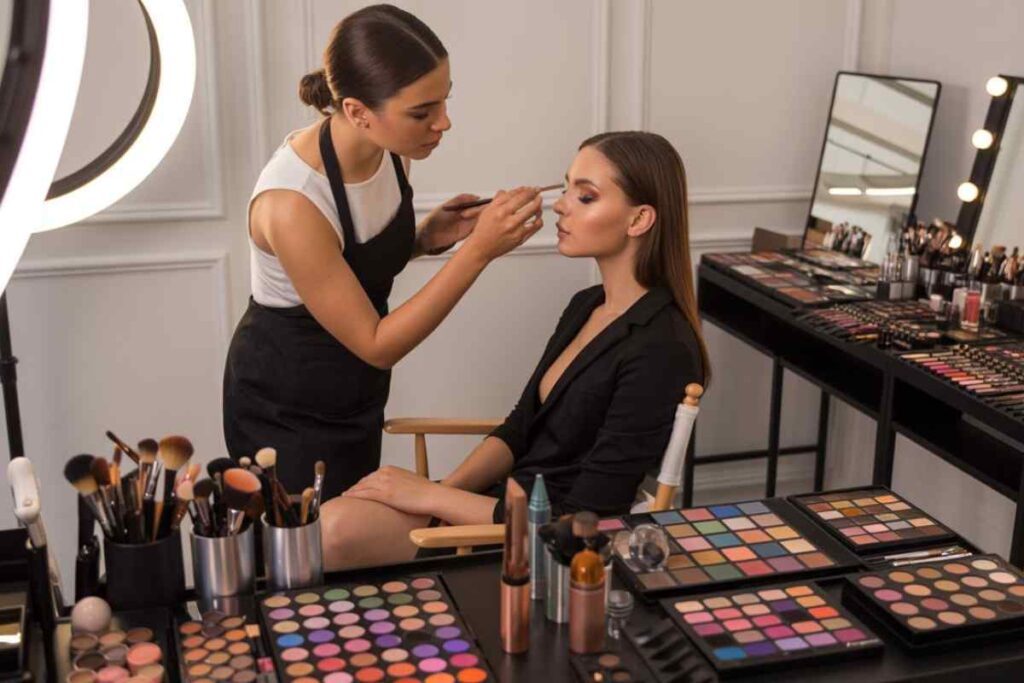
Becoming a makeup artist is more than just applying makeup. It is a creative career that combines artistry, skill and professionalism.
From helping clients feel confident to transforming actors for film and television, makeup artistry is a rewarding field with opportunities in fashion, entertainment, bridal and even permanent makeup.
If you’ve ever wondered how to become a professional makeup artist, this comprehensive guide will take you through every step, including certifications, training, career paths and tips from those already thriving in the industry.
What Does a Makeup Artist Do?
A makeup artist, often abbreviated as MUA, is a licensed professional trained to apply makeup for various purposes. Their work is not limited to enhancing natural beauty; it extends to film, fashion, theatre and even special effects.
Makeup artists help clients feel confident, prepare models for photoshoots, create character looks for film and theatre and sometimes even design prosthetics and digital effects for media productions.
Professional MUAs must be skilled in using products like foundation, concealer, eyeshadow, lipstick and eyeliner, as well as in applying these products with brushes, sponges and other tools.
Beyond technical expertise, they must excel in client interaction, communication and consultation. A makeup artist’s role is to understand the client’s vision and bring it to life creatively while maintaining hygiene and professionalism.
Many makeup artists also specialize in niche areas. For example, some pursue careers as permanent makeup artists, offering semi-permanent solutions like eyebrow microblading, lip tinting and eyeliner tattooing.
Others may focus on bridal makeup, editorial and fashion shoots or even special effects for movies and theatre.
Education and Training: The First Step
To become a certified makeup artist, formal training is highly recommended. While some professionals are self-taught, attending a beauty school or makeup program accelerates your career by teaching essential techniques, providing hands-on practice and giving access to professional networks.
Choosing the Right Program
Aspiring MUAs can choose between cosmetology programs, esthiology (esthetician) programs or specialized makeup courses.
Cosmetology programs usually offer broader training, including hair and skincare, while esthiology programs focus more on skin and makeup application.
Specialized programs, such as those offered by the College of Makeup Art & Design (CMU) or Inspire Greatness Aveda Institutes, focus on industry-specific skills such as bridal, fashion, theatrical or digital makeup effects.
When choosing a school, it’s important to consider its reputation, course content and graduate outcomes.
A high-quality program will provide hands-on training, professional-grade products and opportunities for internships or fashion week exposure.
Certificate and Diploma Programs
For those aiming to become a certified makeup artist, diploma programs are a common path. CMU, for instance, offers programs ranging from 12-week intensive courses in fashion makeup to 35-week complete makeup artist diplomas.
These programs cover multiple areas, including bridal, fashion, film and TV, prosthetics, creature design and digital makeup effects.
Some popular courses include the Complete Makeup Artist Program, Comprehensive Makeup Artist Program, Global Makeup Artist Program and Digital Makeup Effects Artist Program.
Certificate programs, like the Fashion Photographic Makeup Artist or Creature Design courses, provide shorter, focused training for specific skills.
According to student reviews, programs like CMU not only teach technical skills but also emphasize professional behavior, portfolio building and networking.
One graduate noted, “The hands-on approach and guidance from industry experts made it possible for me to secure my first client within weeks of graduation.”
Licensing Requirements
In many places, including California, you must obtain a state license to work professionally as a makeup artist or esthetician.
Licensing requirements vary depending on location but generally involve completing a Board-approved esthetics or cosmetology program and passing practical and written exams.
In California, for example, aspiring estheticians must complete at least 600 hours of training, meet age and education requirements and pass exams administered by the state board.
Licensing allows makeup artists to perform not only cosmetic applications but also skincare services. Maintaining a license requires renewal, usually every two years, along with a renewal fee.
For those aiming to become a permanent makeup artist, additional certifications and training in microblading, micropigmentation or semi-permanent techniques are required. These programs are offered separately and often involve both classroom instruction and hands-on client practice.
Building Skills and Experience
Training alone is not enough to become a professional makeup artist. Continuous practice and real-world experience are essential.
Aspiring MUAs should start by experimenting on themselves, friends or family to master basic techniques such as foundation application, contouring, eye makeup and lip styling.
Retail experience at stores like Sephora or Ulta can also be invaluable. Working in a retail environment exposes you to a variety of products, client consultation skills and an understanding of current trends.
Assisting established makeup artists provides a behind-the-scenes look at professional workflows, including bridal shoots, fashion shows and special effects applications.
Building a professional kit is another crucial step. A complete kit includes high-quality foundations, concealers, lip colors, eyeshadow palettes, brushes, sponges and hygiene supplies.
Many training programs provide starter kits, but as you progress, investing in professional tools ensures better performance and client satisfaction.
Creating a Portfolio and Brand
A strong portfolio is the most important marketing tool for a makeup artist. It should showcase your versatility, creativity and technical skills.
Include photos of bridal looks, editorial shoots, fashion shows and any special effects or theatrical work you have completed.
Developing a personal brand helps you stand out in a competitive industry. Whether through Instagram, a personal website or networking events, your brand should reflect your niche, whether that is bridal, editorial, fashion, permanent makeup or film.
Many successful MUAs use social media to post before-and-after transformations, tutorials and behind-the-scenes content, attracting clients and industry collaborations.
User reviews indicate that building a digital presence early can lead to freelance opportunities and collaborations.
One makeup artist shared, “Posting my work consistently on Instagram connected me with local photographers and bridal clients faster than I expected.”
Specializations in Makeup Artistry
Makeup artistry is a broad field and specialization can help you target your career effectively.
- Bridal Makeup: Offers a steady flow of work and requires the ability to create long-lasting, photogenic looks for various skin types.
- Fashion and Editorial: Involves creating bold and creative looks for photoshoots and runway shows. It requires an understanding of lighting, photography and current trends.
- Film and TV: Includes character makeup, special effects, prosthetics and continuity awareness. Makeup artists in this field often work on-set and need to adapt quickly to directors’ needs.
- Permanent Makeup: Involves tattooing techniques such as microblading, eyeliner and lip pigmentation. Requires specialized certification and a high degree of precision.
- Theatre and Special Effects: Focuses on live performances, prosthetics, aging makeup and imaginative character designs.
Each specialization has unique skills, training programs and client expectations. Aspiring MUAs can start with general training and later choose a niche that aligns with their interests and strengths.
Career Opportunities and Work Environments
Makeup artists can pursue diverse career paths. Freelancing is common, allowing you to take on weddings, photoshoots and events.
Alternatively, salaried positions are available in salons, cosmetic companies, television and film studios and theaters.
California, for example, offers unmatched opportunities due to its media and entertainment industry. Top television and film studios such as ABC, NBC Universal, DreamWorks and Warner Brothers often hire licensed MUAs for productions.
Cosmetic companies like Bella Pierre and GAR Labs also employ makeup professionals for product demonstrations, marketing and client services.
Salons and spas provide a stable working environment where makeup artists can combine services with skincare and haircare.
Theatrical venues and performing arts centers, from the Geffen Playhouse to Walt Disney Concert Hall, hire MUAs to prepare performers for live shows.
According to professionals in the industry, networking is key. Connecting with photographers, models, stylists and event coordinators often leads to job opportunities and collaborations that wouldn’t be advertised publicly.
How Long Does It Take to Become a Makeup Artist?
The timeline depends on the path you choose. Certificate programs can take as little as 4 to 12 weeks, while full diploma programs usually range from 6 to 35 weeks.
Licensure programs, such as esthiology or cosmetology in California, may take 600 to 1,600 hours depending on whether you pursue part-time or full-time courses.
Becoming a certified makeup artist may take longer if you include advanced courses, specializations or permanent makeup certification. Continuous practice, freelancing and networking are part of the journey even after formal training ends.
Real User Experiences
Sophie, a recent graduate from Inspire Greatness Aveda Institutes, shared, “The hands-on experience in the institute’s salon prepared me for working with real clients. By the end of my program, I was confident in bridal, fashion and basic film makeup techniques.”
Rickie, a freelance makeup artist focusing on editorial shoots, said, “My portfolio was my passport. Once I showcased diverse looks online, clients started reaching out. Certification boosted my credibility, but experience and networking got me actual work.”
Justine, specializing in digital and permanent makeup, noted, “Training in digital effects and microblading opened doors I never imagined. I now combine traditional and permanent techniques for high-profile clients and the certifications helped me stand out.”
Tips for Success
- Practice Consistently: The more faces you work on, the better your technique.
- Invest in Quality Tools: Professional brushes, products and hygiene supplies matter.
- Build a Portfolio Early: Document all work from training, freelance or personal projects.
- Network Actively: Attend events, connect with photographers and collaborate with peers.
- Stay Updated: Trends, products and techniques evolve constantly. Continuous learning is key.
- Specialize Wisely: Choose a niche that aligns with your skills and interests.
Conclusion
Becoming a makeup artist is a blend of creativity, skill and professionalism. With the right education, certification, hands-on experience and dedication to building your brand, a career in makeup artistry can be both financially rewarding and personally fulfilling.
Whether you aim to work in fashion, bridal, film, theater or permanent makeup, following a structured path starting with quality training and progressing through experience and networking will set you up for long-term success.
From establishing your first portfolio to landing high-profile clients or working on-set in California or globally, the journey requires effort, passion and continuous learning.
The end result is a career that allows you to express creativity, enhance beauty and leave a lasting impression on clients and audiences alike.
FAQs
What is the first step to becoming a professional makeup artist?
The first step is to enroll in a cosmetology or esthetics program to learn foundational skills, hygiene practices and hands-on makeup application.
How long does it take to become a certified makeup artist?
Certification programs can range from 4 weeks for short courses to 35 weeks for full diplomas. Licensing or esthetics programs may take 600–1,600 hours.
Do I need a license to work as a makeup artist in the U.S.?
Yes, in many states like California, you need an esthetician or cosmetology license to practice professionally, especially if offering skincare or permanent makeup services.
What is the difference between a regular MUA and a permanent makeup artist?
A regular MUA applies temporary makeup for events, fashion or film. A permanent makeup artist uses tattooing techniques for semi-permanent results, such as microblading or eyeliner.
How can I build a strong portfolio as a beginner?
Start by photographing your work on friends, family or models. Include diverse looks, bridal, fashion, editorial and special effects and maintain a consistent online presence.
What career opportunities exist for makeup artists?
Opportunities include freelancing for weddings and photoshoots, working in salons, cosmetics companies, television, film, theater, fashion events and specialized fields like digital or SFX makeup.