
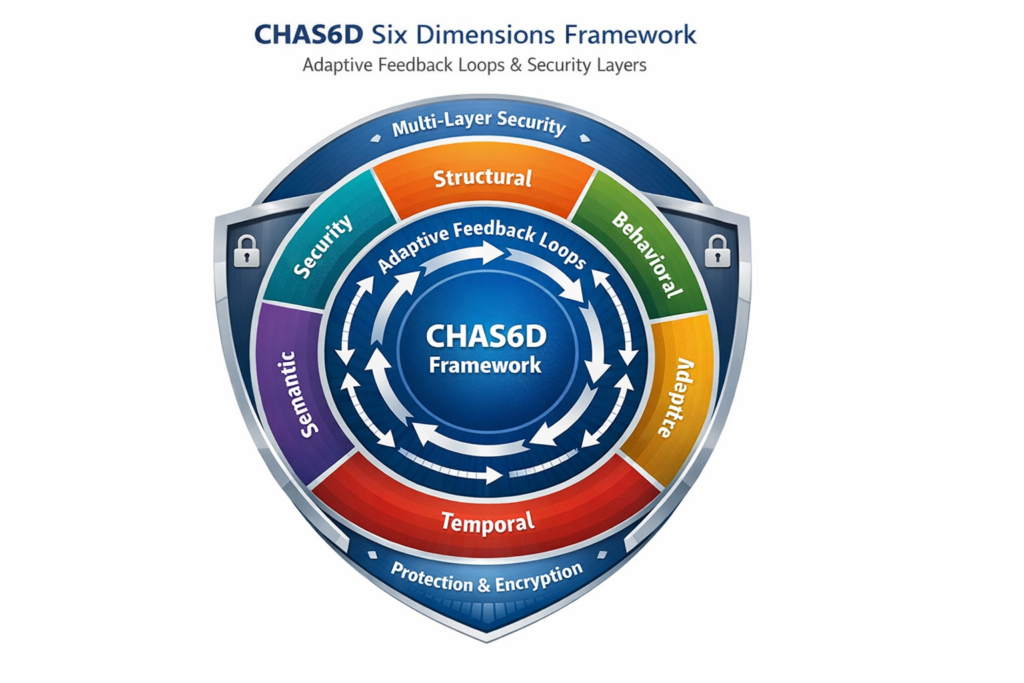
CHAS6D short for Cybernetic Hierarchical Adaptive Systems in Six Dimensions is a revolutionary framework in digital system design. It helps organizations build adaptable secure and intelligent infrastructures.
These systems can evolve with complex operational demands. Unlike traditional models CHAS6D integrates multiple dimensions. It covers everything from architecture to user behavior. This multidimensional approach improves decision making and scalability.
It also enhances system resilience in dynamic environments. In this article we examine its core components principles and technical implementations. We also explore real world applications and actionable insights for professionals and tech enthusiasts.
What Is CHAS6D
CHAS6D is more than a theoretical concept. It is a structured methodology for optimizing complex systems. The framework operates across six operational dimensions. At its core, it emphasizes adaptive intelligence.
It also incorporates hierarchical control for better system management. Cybernetic feedback allows systems to monitor and learn autonomously. This self-adjusting capability ensures dynamic system performance.
Full Form of CHAS6D
- Cybernetic Systems designed with feedback loops to self regulate and improve over time.
- Hierarchical Multi layered structures that distribute logic and authority efficiently.
- Adaptive Dynamic mechanisms that respond to environmental or operational changes.
- Systems Interconnected components working toward shared objectives.
- Six Dimensions Analytical layers that ensure security performance and scalability.
Framework Purpose and Vision
The primary goal of this framework is to create systems capable of evolving without extensive manual intervention. It bridges gaps between hardware software and user interaction delivering enhanced predictability and operational efficiency. Moreover its multidimensional approach ensures that security performance and usability are optimized simultaneously.
How CHAS6D Differs from Traditional Frameworks
Traditional IT frameworks often rely on linear processes or single layer security protocols. In contrast this approach integrates adaptive algorithms semantic analysis and real time monitoring across all layers. Consequently it addresses complex challenges in modern ecosystems such as hybrid cloud management autonomous decision making and predictive risk modeling.
Origins and Evolution of CHAS6D
Theoretical Foundations
CHAS6D has its roots in cybernetics and systems theory which emphasize feedback loops and self regulating structures. Early research focused on distributed intelligence and autonomous control systems laying the groundwork for multidimensional operational models.
Early Industry Use Cases
Initial implementations targeted high stakes environments such as military logistics and healthcare networks where adaptability and security were critical. These experiments demonstrated the framework’s potential to streamline decision making and reduce operational risk attracting broader interest from both academia and enterprise IT sectors.
Evolution Toward AI Driven Infrastructure
Over the years CHAS6D has evolved to incorporate machine learning edge computing and semantic data processing. Organizations now deploy it in smart grids autonomous vehicles and IoT ecosystems highlighting its flexibility and forward looking design.
Breaking Down the CHAS6D Framework
Core Components
- Cybernetic Enables self correction and continuous optimization through feedback loops.
- Hierarchical Structures systems into scalable layers, isolating faults while distributing control.
- Adaptive Allows real time response to dynamic environments using predictive modeling.
- Systems Connects disparate modules for cohesive operation across platforms.
- Six Dimensions Guides analysis and optimization across structural behavioral adaptive temporal semantic and security layers.
The Six Dimensions of CHAS6D
Structural Dimension
Focuses on architecture integrity including hardware software and codebase coherence. It ensures that each layer is robust and can handle scaling efficiently.
Behavioral Dimension
Monitors interactions between users and systems using analytics to detect patterns or anomalies. This dimension is critical for user centric design and real time performance evaluation.
Adaptive Dimension
Incorporates machine learning models and dynamic rules to enable systems to learn and evolve. For example predictive algorithms in a financial system adjust risk thresholds automatically.
Temporal Dimension
Tracks time based processes including real time monitoring and historical analysis. It ensures accountability and traceability in system decisions.
Semantic Dimension
Interprets data contextually using ontologies and metadata. This allows more informed decision making such as recognizing anomalies not detectable by raw data alone.
Security Dimension
Integrates protection mechanisms across all layers from encryption protocols to behavioral monitoring proactively defending against emerging threats.
Core Principles That Power CHAS6D
- Feedback Integration Every layer incorporates real time monitoring for continual self optimization.
- Multilayered Control Hierarchical logic isolates faults and distributes decision making efficiently.
- Adaptive Intelligence Systems dynamically adjust to both predictable and unpredictable conditions.
- Semantic Awareness Data is interpreted in context to ensure accurate decision making.
- Temporal Accountability All adjustments and decisions are logged for auditing and transparency.
- Security by Design Protection mechanisms are embedded throughout rather than added post implementation.
How CHAS6D Works in Practice
CHAS6D operates as a holistic system where each dimension interacts with others. Consider a smart healthcare monitoring system sensors collect patient data structural algorithms detect irregular patterns behavioral and adaptive and alerts are time stamped temporal with full encryption security.
Semantic engines interpret the data contextually improving clinical decision making. Similarly in finance it can enable adaptive fraud detection by analyzing transaction behavior patterns automatically adjusting risk thresholds in real time. These workflows highlight the framework’s versatility across industries.
Technical Architecture and Implementation
Foundational Layers
- Sensor Interfaces & IoT Nodes Collect environmental and operational data.
- Edge Processing Modules Allow local decision making to reduce latency.
- Cloud Integration Layer Centralizes data for scalability and analytics.
- Semantic Processing Engines Convert raw inputs into actionable insights.
- Distributed Security Frameworks Multi layer encryption and anomaly detection protect systems.
Programming Models and Technologies
- Python Rapid prototyping and ML integration.
- Rust Secure systems programming with concurrency support.
- TensorFlow Powers adaptive learning models.
- GraphQL Semantic data querying.
- Kubernetes Orchestrates distributed components efficiently.
Hybrid and Multi Cloud Considerations
CHAS6D is platform neutral but benefits from integration with hybrid cloud environments, enhancing resilience and flexibility.
Security in CHAS6D A Comprehensive Breakdown
| Dimension | Security Feature |
| Structural | Encrypted hardware pathways secure boot |
| Behavioral | Machine learning anomaly detection |
| Adaptive | Dynamic auto patching and reconfiguration |
| Semantic | Context aware threat identification |
| Temporal | Full event logs for forensic and accountability purposes |
This approach ensures that systems are resilient against both known and emerging threats, establishing a proactive security posture.
Real World Applications of CHAS6D
- Cybersecurity Architecture Predictive threat modeling and secure failovers.
- Autonomous Vehicles Intelligent decision making in dynamic environments.
- Smart Grids Real time energy management with adaptive recovery.
- Healthcare IT Secure interoperable patient monitoring.
- Financial Algorithms Fraud detection and risk adjusted learning models.
- IoT & Edge Computing Scalable adaptive device ecosystems.
- AI Governance & Robotics Ethical autonomous decision making.
- Satellite & Space Based Systems Adaptive control for complex operations.
Benefits of Using CHAS6D
- System Resilience Reduces downtime and operational risks.
- Predictive Risk Mitigation Identifies potential vulnerabilities before they escalate.
- Interoperability Seamless integration across platforms and devices.
- Scalability & Future Proofing Adapts to evolving infrastructure needs.
- Transparency & Trust Enhances user confidence with accountable auditable systems.
- Operational Efficiency Streamlines processes and improves resource allocation.
Challenges Risks and Limitations
- Architectural Complexity Requires multidisciplinary expertise.
- High Implementation Costs Initial investment and ongoing maintenance are significant.
- Tooling Gaps Limited off the shelf solutions custom development needed.
- Training Requirements Teams need skills in AI cybernetics and system design.
- Legacy Integration Difficulties in combining with older infrastructures.
- Overengineering Risks Potential for unnecessary complexity if misapplied.
- Governance & Ethical Concerns Must address AI bias and autonomous decision making.
- Common Misconceptions Clarifying that it is applicable beyond advanced tech labs.
CHAS6D vs Other Frameworks
| Feature | CHAS6D | Microservices | Zero Trust Architecture | Traditional SDLC |
| Adaptive Intelligence | Yes | Limited | Limited | Minimal |
| Multidimensional Security | Comprehensive | Layered only | Focused on access | Post implementation |
| Real Time Learning | Yes | Limited | Minimal | No |
| Feedback Loops | Fully integrated | Partial | Not standard | No |
| Semantic Awareness | Contextual | No | No | No |
The Future of CHAS6D
- Greater integration with AI governance models and autonomous systems.
- Expansion into ethical robotics and decentralized organizations DAOs.
- Increased adoption in hybrid cloud and multi platform environments.
- Potential standardization and open source tool development by 2030.
This forward looking perspective indicates that CHAS6D is likely to shape the next generation of adaptive digital infrastructure.
Conclusion
CHAS6D is a transformative approach to digital system design. It combines adaptability security and intelligence across six dimensions. The framework applies to industries like healthcare finance and autonomous tech.
It integrates feedback loops for continuous system improvement. Semantic awareness enables context driven decision making. Hierarchical control ensures organized and scalable operations.
This approach delivers resilient future ready infrastructures. Adoption requires expertise and careful planning. The benefits efficiency risk mitigation and scalability make it ideal for organizations seeking a competitive edge.
FAQ’s
What does CHAS6D stand for?
It stands for Cybernetic Hierarchical Adaptive Systems in Six Dimensions a framework for adaptive and secure digital ecosystems.
Is CHAS6D a real framework or theoretical concept?
While it originated as a theoretical model real world implementations in healthcare finance and IoT are emerging.
Who developed CHAS6D?
It evolved from cybernetics and systems theory research with contributions from academic and enterprise IT sectors.
What industries benefit most from CHAS6D?
Healthcare finance autonomous systems smart grids and cybersecurity infrastructures gain the most immediate advantages.
How is CHAS6D different from traditional frameworks?
It integrates six operational dimensions adaptive intelligence and embedded security unlike linear or single layer frameworks.
What are the main challenges of implementing CHAS6D?
Challenges include system complexity high costs limited tooling and the need for multidisciplinary expertise.