
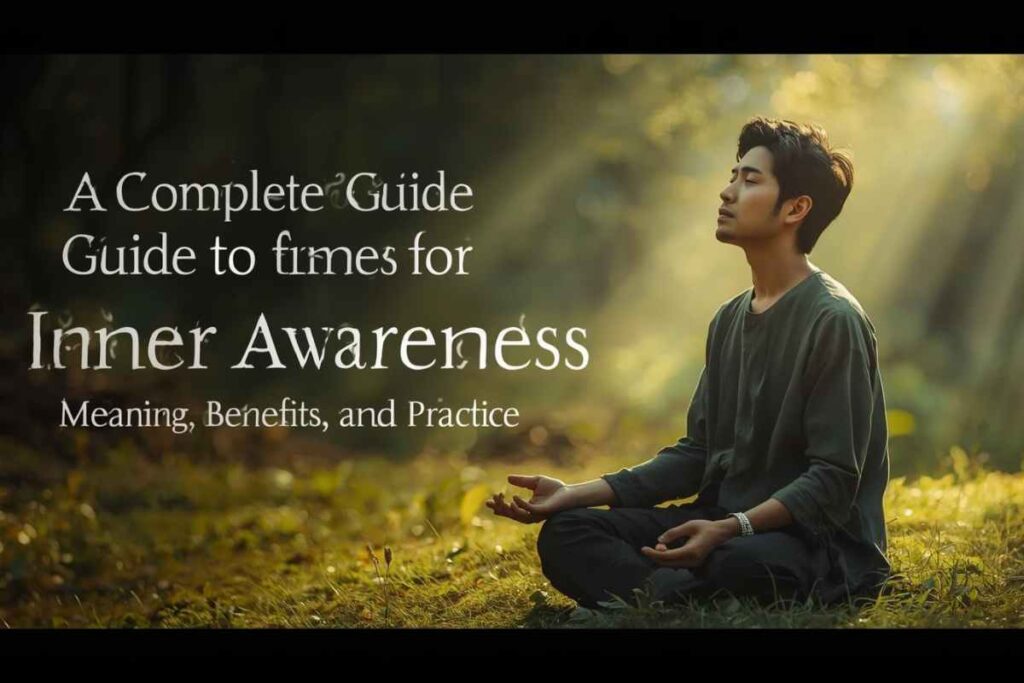
In a world of constant stimuli and digital noise, many people feel mentally scattered, stressed or disconnected from themselves.
For those searching for clarity, emotional balance and deeper self-understanding, the concept of Antarvafna is gaining attention online as a powerful inward observation practice.
This article explores what Antarvafna is, why it matters, how it works and how to apply it in daily life.
What Is Antarvafna A Definition!
At its core, Antarvafna refers to inward observation or inner reflection, a conscious, gentle awareness of one’s thoughts, emotions, sensations and inner mental movements without judgment, reaction or interference.
The term is commonly interpreted as deriving from the roots “antar” meaning “inner,” and a conceptual root related to observation or inward gaze.
Unlike goal‑oriented self‑help techniques that focus on change or performance, Antarvafna emphasizes non‑judgmental witnessing simply noticing what arises within the mind.
This allows insights to emerge naturally and supports deeper self‑understanding and emotional balance.
Understanding User Intent Around “Antarvafna”
When people search “antarvafna,” they generally seek:
- A clear definition and meaning of the term
- Practical techniques for inner awareness
- Benefits for mental clarity, emotional balance and stress relief
- How it differs from meditation or mindfulness
- Examples of practice and beginner steps
This search intent covers both informational and applied wellness content, so this article blends explanation with actionable guidance.
Antarvafna vs Meditation and Mindfulness
Many people confuse Antarvaf with meditation or mindfulness. While these practices overlap, there are key differences:
| Aspect | Meditation | Mindfulness | Antarvafna |
| Goal | Calm the mind | Present awareness | Observe inner activity |
| Focus | Breath or object | Moment → experience | Thoughts, emotions, sensations |
| Judgment | Encouraged not to judge | Non‑judgmental awareness | Non‑judgmental witnessing |
| Structure | Often a formal sitting | Can be formal or informal | Flexible, inner reflection focus |
Antarvaf does not require guiding the mind to a single point (e.g., breath), nor does it rely on labels; instead, it invites you to simply watch the inner field of experience.
Origins and Cultural Context
While “Antarva is not widely documented in classical Sanskrit dictionaries, the idea of turning inward for self‑realization has deep roots in Indian spiritual traditions:
- Advaita Vedanta emphasizes atma vichara (self‑inquiry), asking “Who am I?”
- Buddhist Vipassana teaches observing sensations and mental formations without attachment
- Yogic texts encourage withdrawal of senses (pratyahara) and deep inner observation as steps toward insight.
Over time, modern writers have adapted these insights under the umbrella term Antarvafna, blending ancient introspective principles with contemporary needs for clarity and emotional resilience.
Why Antarvafna Matters in Today’s World
Modern life is fast‑paced, overstimulating and constantly outward‑directed. This leads many individuals to:
- Feel disconnected from their thoughts
- React impulsively under stress
- Struggle with emotional regulation
- Experience mental fog or lack of clarity
Antarvafna offers a counterbalance: a way to slow down, turn inward and become aware of inner processes instead of being driven by them. Over time, this can foster:
- Greater clarity
- Emotional resilience
- Less reactive behavior
- A stronger sense of self‑direction
- Improved relationships and decision‑making
Core Principles of Antarvafna
Antarvafna comes down to several foundational principles that support its effectiveness:
Open Awareness
Instead of focusing on one thing, you observe the landscape of your inner experience — thoughts, feelings, sensations without interference.
Non‑Judgmental Witnessing
You acknowledge what arises internally without labeling it as “good” or “bad.” This fosters neutral awareness and emotional balance.
Consistency Over Intensity
Regular short practices (even 5–10 minutes a day) are more beneficial than infrequent long sessions.
Self‑Inquiry Attitude
As the observer, you may ask reflective questions such as “What emotion is coming up now?” or “Why do I react this way?” to deepen understanding.
Benefits of Practicing Antarvafna
Mental Clarity and Focus
Observing thoughts without reacting can reduce mental clutter, enhance focus and improve the quality of decision‑making.
Emotional Resilience
By noticing emotions as they arise, you gain space between stimulus and response — improving emotional regulation.
Reduced Stress and Anxiety
Turning attention inward helps lower reactivity to external pressures, resulting in reduced stress levels.
Improved Self‑Awareness
Antarva helps reveal habitual patterns and motivations, leading to more authentic living.
Enhanced Well‑Being
Consistent inner reflection supports a sense of calm, inner freedom, and purposeful action.
How to Practice Antarvafna: Step‑by‑Step Guide
You don’t need special tools, just sincere attention and willingness to observe.
Step 1: Find a Comfortable Space
Choose a quiet place where interruptions are minimal. Silence helps, but it’s not required.
Step 2: Settle into Stillness
Sit comfortably with a straight posture. Close your eyes gently or keep a soft gaze.
Step 3: Observe Inner Activity
Without trying to change anything, simply watch thoughts, emotions, sensations or memories as they arise. Think of watching clouds pass across the sky.
Step 4: Avoid Interference
Don’t try to suppress or engage with the mental content. Just observe what is there.
Step 5: Reflect and Journal
After the session, write down any insights or recurring themes. This reinforces learning and reveals deeper patterns.
Step 6: Integrate into Daily Life
You can practice Antarva during routines like walking, conversations or breaks — by simply noticing your inner responses.
Common Challenges and How to Overcome Them
Mind Wandering
It’s normal for the mind to drift. Gently bring attention back without frustration.
Restlessness
Early practices may feel uncomfortable. Observe the discomfort itself — it’s part of inner awareness.
Expecting Immediate Peace
Antarvafna isn’t a quick escape from thoughts. Progress comes with consistency.
Antarvafna in Daily Life: Practical Scenarios
| Situation | How to Apply Antarvafna |
| Morning routine | Sit quietly and notice thoughts before starting your day. |
| Work break | Pause and observe your emotional state without reacting. |
| Conversation | Notice inner reactions before responding. |
| Conflict | Observe stress or discomfort before taking action. |
Antarvafna vs Overthinking
Antarvafna is neutral observation without judgment. Overthinking involves mentally replaying or analyzing situations, often leading to anxiety.
Meditation and mindfulness also overlap but typically involve structured techniques (breath focus, anchors or body scanning). Antarva is less about fixing thoughts and more about watching them.
Conclusion
Antarvafna is a flexible, accessible approach to inner reflection that fits modern life demands. Far from being a mystical or rigid system, it’s a practical technique for observing the mind with honesty and care.
Over time, this observational practice fosters clarity, emotional balance and a deeper connection to your values and motivations.
Start small, stay consistent and allow yourself the space to witness your inner world without judgment. In a distracted age, Antarvafna invites you to turn inward and discover clarity, peace and intentional presence.
FAQ’s
Is Antarvafna a type of meditation?
Yes it involves awareness like meditation, but the emphasis is inner reflection and observation rather than concentration on breath or mantra.
Can beginners practice Antarvafna?
Absolutely. Start with just 5 minutes a day and gradually increase based on comfort.
Do I need spiritual belief to practice it?
No. Antarvafna works for anyone seeking mental clarity and emotional balance, regardless of religion.
How soon will I see benefits?
Some people notice calmness quickly; deeper emotional insights usually develop over weeks of consistent practice.
Is Antarvafna only for stress reduction?
No — while it helps reduce stress, it primarily nurtures self‑awareness and intentional living.